Monday, March 29, 2021

Personalize the Plate with Whole Grains


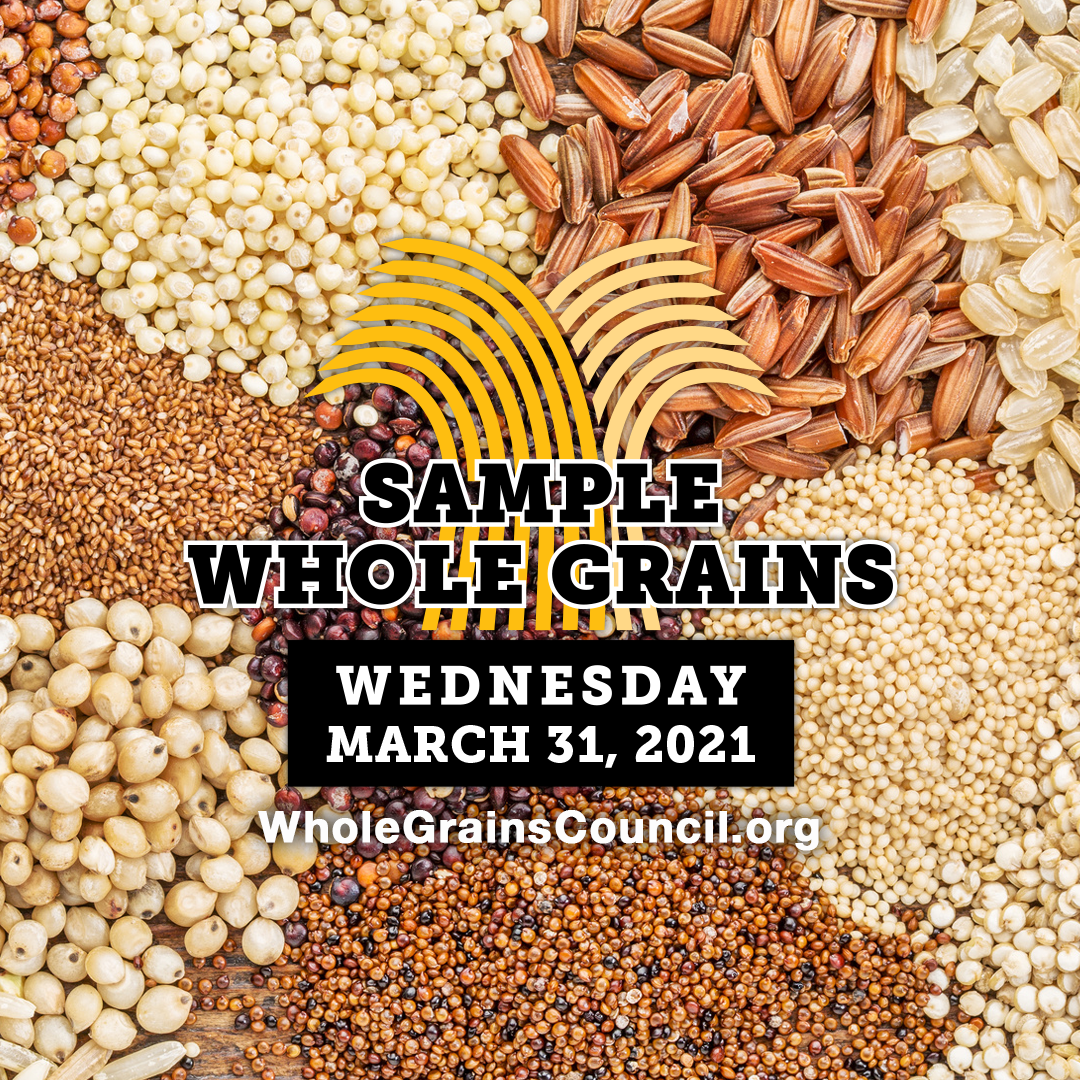
Whole Grains Sampling Day-the last Wednesday of March (National Nutrition Month) is a day set aside to try a new whole grain.

Any grain, when cooked, is the starting point for stir fry and grain bowls.

Grains serve as the chewy component of soups.

When roasted, they provide the cereal block in Muesli.

Cooked whole grains offer unique tastes and textures to hot dishes and cold salads.

You've probably noticed the variety of grains ground into flours and pastas on the grocery shelves. Here's my farro pasta, made with 3/4 whole grain farro flour.


In all of those dishes, whole grains are combined with vegetables and protein to create a healthy plate.


The time is here to try a new whole grain. The West Virginia Academy of Nutrition and Dietetics sponsored a whole grains sampling day giveaway in February, with proceeds funding the scholarship and foundation program supporting food and nutrition students.


The winner has been busy creating new dishes

Spelt Stew


Teff & Amaranth Sourdough Waffles

Bulgur Pilaf

Teff Banana Porridge

What new whole grain will you try soon? Most people who try a new whole grain like it!

National Nutrition Month® is an annual campaign created by the Academy of Nutrition and Dietetics. During the month of March, everyone is invited to learn about making informed food choices and developing healthful eating and physical activity habits.

This year's theme is "Personalize Your Plate." There is no one-size-fits-all approach to nutrition and health. We are all unique with different bodies, goals, backgrounds and tastes! And a Registered Dietitian Nutritionist can tailor a healthful eating plan that is as special as you are.


Monday, March 22, 2021

Personalize the Meal Setting

It's part of the master meal plan-providing a clean and inviting scene for eating. Plate arrangement, food safety and sanitation, orderliness of surroundings all contribute to the enjoyment of a meal. Whether eating at home or in a food service establishment, the environment is as important as the menu and the service. Take a seat and enjoy the meal with me:

  • Start with a pretty plate, basket, tray or lunchbox to place the food. Add cutlery as necessary with napkin and cup.
  • Trust that the food was prepared in a clean kitchen where food was stored and prepared at proper temperatures. Was hand washing frequent?
  • Find a spot free of clutter, with a view that avoids piles of papers, boxes, dishes and garbage. 
  • Enjoy a meal without a screen or even a "to do" list in front of you.
  • Try to allow at least 20 minutes of actual eating time.

The plate or lunchbox can help in planning the meal components and portions. Think vegetables and fruit in half the compartments, whole grains in a quarter and lean protein in the rest. A 7 inch plate can make the portions appear larger. Adding a beverage of milk or plant based dairy contributes calcium, Vitamin D and B vitamins to the diet.

National Nutrition Month® is an annual campaign created by the Academy of Nutrition and Dietetics. During the month of March, everyone is invited to learn about making informed food choices and developing healthful eating and physical activity habits.

This year's theme is "Personalize Your Plate." There is no one-size-fits-all approach to nutrition and health. We are all unique with different bodies, goals, backgrounds and tastes! And a Registered Dietitian Nutritionist can tailor a healthful eating plan that is as special as you are.


Sunday, March 14, 2021

Personalize Your Spices

Is it time to spring clean the spice cabinet? Most of us have spices too old to remember when they were purchased. Many times we buy a bottle of a certain spice when a small amount is required to make a new recipe. 

Internet searches give suggestions for suitable substitutes. Chances are you've developed some of your own blends which suit your palate.

The Chicken Tagine recipe in this month's Fine Cooking magazine has a Moroccan spice blend ras el hanout in the list of ingredients but offers a DIY blend in the headnote. These spices are likely found in most pantries.

Ras el hanout

(2 teaspoon)

1/2 teaspoon ground cumin
1/2 teaspoon ginger
1/4 teaspoon cinnamon
1/4 teaspoon coriander
1/4 teaspoon allspice
 
Here are more of my homemade spice blends:
 

Homemade Taco Seasoning 

(Makes 3 1/2 cups)

2 cup chili powder
2/3 cup ground cumin
2/3 cup garlic powder
2 tablespoon 2 teaspoon ground white pepper
1 tablespoon 1 teaspoon cayenne pepper

Mix and store in closed container. 
This is the recipe we made in the HSC Cafe.   
 

Seafood Seasoning 

(Makes 2/3 cup:  One serving is 1/4 teaspoon)

4 tablespoon celery seed
3 tablespoon paprika
1 tablespoon garlic powder
1 tablespoon black pepper
2 1/3 teaspoon allspice
3/4 teaspoon mustard powder
1/4 teaspoon cayenne


Cajun Seasoning

(1 teaspoon)

1/2 teaspoon paprika
1/4 teaspoon garlic powder
1/4 teaspoon onion powder
Pinch white pepper
Pinch cayenne
Pinch dried thyme
Pinch dried oregano

Blackened Seasoning

(Serves 2)

1/2 teaspoon paprika
1/2 teaspoon chili powder
1/2 teaspoon garlic powder
1/4 teaspoon black pepper
1/8 teaspoon salt

National Nutrition Month® is an annual campaign created by the Academy of Nutrition and Dietetics. During the month of March, everyone is invited to learn about making informed food choices and developing healthful eating and physical activity habits.

This year's theme is "Personalize Your Plate." There is no one-size-fits-all approach to nutrition and health. We are all unique with different bodies, goals, backgrounds and tastes! And a Registered Dietitian Nutritionist can tailor a healthful eating plan that is as special as you are.


Sunday, March 7, 2021

Personalize Your Breakfast

Breakfast is a time for building up muscles, stamina and frame of mind. Winter breakfasts might include a hot cereal, toasted bagel or even a skillet meal with an omelet and potatoes. Sometimes it's a time to enjoy yesterday's leftovers, microwave pizza or sandwich. Each of us personalizes the choices.  Like other meals-include a fruit or vegetable, a whole grain and lean protein foods. 

My breakfast parfait above is made with layers of whole grain fruit and nut bread, nonfat plain yogurt and a carrot marmalade. I drink a glass of skim milk with each meal providing high quality protein and hydration to my nutrition profile.

Breakfast is especially important for seniors and those recuperating from illness or injury.   While most Americans eat the bulk of the daily protein later in the day, it's best to to space the intake throughout the day. 

I aim for 20-24 grams of protein at breakfast.  That's more than a cup of milk or a container of yogurt-though that's a place to start. Soy and pea milk each have equivalent amounts of protein per cup (8 grams) as cows' milk.  Almond, rice and coconut milk do not.  Greek yogurt has twice the protein as regular milk.
 
I like to plan my seasonal meals with ideas from magazines. The "Carrot Cake Marmalade" recipe is from Food and Wine Magazine. It is delicious! Because my plans included eating with a bread made with almond paste (also sweetened), I decreased the granulated sugar in the original recipe to 5 tablespoons. 

Eating the same foods over and over can get old-and may not be the healthiest choice. Including different foods can increase nutrient variety and decrease food insensitivity. Here are some out-of-my-normal breakfasts I've enjoyed with ideas from cookbooks and magazines.

Buckwheat Waffles


Quinoa Breakfast Bowl with Fermented Cabbage


Grits and Fruit Bowl

 
Pot Sticker Huevos Ranchero
Green Smoothie

Sourdough Pancakes with Peanut Butter and Banana


Overnight Fruit Cobbler

Teff Porridge

National Nutrition Month® is an annual campaign created by the Academy of Nutrition and Dietetics. During the month of March, everyone is invited to learn about making informed food choices and developing healthful eating and physical activity habits.

This year's theme is "Personalize Your Plate." There is no one-size-fits-all approach to nutrition and health. We are all unique with different bodies, goals, backgrounds and tastes! And a Registered Dietitian Nutritionist can tailor a healthful eating plan that is as special as you are.


Monday, March 1, 2021

Personalize the Recipe Your Way

You do it all the time-change a recipe to fit you. You adjust the seasonings to fit your palate, perhaps changing hot peppers to sweet peppers, adding more or less of a given spice to suit you. Some use less sugar to meet dietary guidelines. Others use one half whole grain flour for the total flour.

In this recipe, I'll suggest swaps for protein ingredients and techniques for fitting the casserole in your favorite size baking dish.

Tortilla Casserole

I've made this casserole with cooked chicken or pork. First I bake the chicken (to an internal temperature of 165F) or cook the pork tenderloin (in the slow cooker to an internal temperature of 145F). Then I shred the cooked meat in the kitchen aide mixing bowl using the paddle blade. One chicken breast is enough for a 3 person casserole. One pork tenderloin will feed 6. Shred in quantity and freeze some for an easy barbecue or casserole at a later date.


For a meatless version, substitute cooked dried beans.

For a 9 X 13 inch pan (6 servings), double the amount of ingredients. When we prepared this in the cafeteria I managed, we arranged 12 servings in a half size steam table pan and cut 3 X 4 to serve.

(3 servings)

Cook meat or beans. Shred meat. 
9 ounce chicken breast, boneless, skinless or pork tenderloin or 1 1/4 cups cooked dried beans.

On stove-top, heat tomatoes, spices, peppers and onion.
2/3 cup canned diced tomatoes
1 teaspoon cumin
2/3 teaspoon chili powder
Dash oregano
1/3 cup sweet peppers, diced
2 tablespoon onion, diced

Add corn and cooked protein (chicken, pork or beans) to pot.
1/2 cup corn
Cooked protein

Mix cornstarch into milk. Add milk to pot.  Heat over medium low heat until mixture begins to thicken, about 15 minutes.
2/3 teaspoon cornstarch, non GMO
1/2 cup skim milk


Cut each tortilla into quarters.  Arrange 1/2 of tortillas in bottom of small baking dish (this one is 5 X 9), greased with olive oil spray
3 corn tortillas

Add 1/2 of vegetable-protein mix.

  
Top with 1/2 of cheese.
3/4 cup shredded cheese

Repeat layers.


Bake at 325 F for 1/2 hour. 

National Nutrition Month® is an annual campaign created by the Academy of Nutrition and Dietetics. During the month of March, everyone is invited to learn about making informed food choices and developing healthful eating and physical activity habits.

This year's theme is "Personalize Your Plate." There is no one-size-fits-all approach to nutrition and health. We are all unique with different bodies, goals, backgrounds and tastes! And a Registered Dietitian Nutritionist can tailor a healthful eating plan that is as special as you are.

Sunday, February 14, 2021

Sourdough Discard Blueberry Muffins

Today I converted an existing recipe into one where I'm using my sourdough discard. I typically have 1/2 cup discard after removing 2 tablespoons for the mother starter. I subtracted 3 tablespoons flour and 3 tablespoons liquid (milk) from those ingredients in the recipe. The end result was good. Since the baking powder and soda in the existing recipe compared  to amounts in other recipes utilizing sourdough discard, I did not change those.

Blueberry Spelt Muffins with Sourdough Discard

(8 Muffins)

Crumb Topping

Mix crumb topping, cutting in buttery spread until crumbly. Set aside.

2 tablespoon spelt flour

1 tablespoon granulated sugar

1 tablespoon brown sugar

Pinch cinnamon

2 tablespoon buttery spread, grated

Muffins

Beat egg into discard. Stir in sugar.

1/2 cup sourdough discard

6 tablespoon brown sugar

1 egg

Dry mix

Mix dry ingredients

1 cup 5 tablespoon spelt flour

1 teaspoon baking powder

1/2 teaspoon baking soda

1/8 teaspoon salt

Zest of 1 lemon

Liquid Mix

Combine liquid ingredients.

1/3 cup olive oil

3 tablespoon buttermilk

Alternately add dry ingredients then liquid ingredients to the discard. Stir only until combined. Fold in blueberries. 

2/3 cup fresh blueberries

Scoop 1/4 cup batter into muffin tins greased with olive oil spray. Top each with 1 1/2 tablespoon crumb topping. 

Bake at 335 F for 27 minutes, turning pan halfway.

Cool in pan on rack for 20 minutes. Remove muffins from pan and continue cooling on wire rack. 


Friday, February 5, 2021

King Tut's Bread

The history behind the ancient grain Kamut is as rich as the taste. Thousands of years old, Kamut was first introduced to the United States in the late 1940s when a United States airman by the name of Earl Dedman purchased 36 kernels of the grain from an Egyptian street vendor. Dedman mailed those to his father in Montana who grew over 1500 bushels of Kamut in just a few years. After being dubbed "King Tut's Grain" at the county fair, the novelty soon wore off. It was in the 1970s when the Quinn family reintroduced Kamut to the United States. The family of organic farmers trademarked Kamut which can never be altered by modern plant breeding programs.

Kamut flour is amber in color and has a smooth, buttery flavor. It is especially good in recipes such as biscuits, Challah and sugar cookies as it brings out the flavor of the flour.

This Challah bread is made with the sponge method of bread baking with two fermentation stages. This method fully hydrates grains with a weaker gluten structure-like Kamut-prior to adding the remaining ingredients. This gives a better rise and lighter texture to the bread.

This recipe is adapted from Kim Boyce's "Good to the Grain" cookbook. Kamut and millet are whole grains. I replaced some of the all purpose flour with whole wheat flour to make the bread 50% whole grain.

King Tut's Challah

(1 loaf)

Sponge stage
Heat milk to 100 F. Pour over yeast in mixing bowl.
2/14 teaspoon active dry yeast
1 cup skim milk
Stir with a spoon until dissolved.
 
Add honey, Kamut and millet flours.
1 tablespoon honey
1 cup Kamut flour
1/4 cup millet flour
Stir to combine.
 
On top of sticky dough, add whole wheat and all purpose flour. Do not stir.
3/4 cup whole wheat flour
1 3/4 cup all purpose flour
Top with salt.
1/2 teaspoon salt.
Do not stir.
Allow sponge to rest 30 minutes.
 
Dough state
Warm eggs in a bowl of hot water.
3 eggs.
Crack into a cup and mix.
 
Add beaten eggs to the sponge. With dough hook in place, mix on low speed until flour is combined. If dough sticks to sides of bowl, add flour 1 tablespoon at a time.
Up to 1/2 cup all purpose flour
 
Turn the mixing bowl to medium and beat for 5 minutes.
 
Scrape dough from hook and beat on medium speed for 5 minutes more.
 
Add buttery spread 1 tablespoon at a time until each is fully incorporated.
4 ounces (1 stick) buttery spread.
 
First rise
Scrape dough into a bowl greased with olive oil spray. Turn to coat. Cover and allow to rest 1 1/2 hours.
 
Second rise
Scrape dough onto floured surface. Fold the dough into itself, forming a ball and place into a bowl greased with olive oil spray. Cover and allow to rest 1 hour.
 
Shaping and third rise
On a floured surface, divide dough into 3 pieces. Roll each piece into a 14 inch rope. Braid, pinch ends together and place on a prepared pan sprinkled with seeds. I used a large Italian loaf pan, greased with olive oil spray.
1 tablespoon sesame seeds
 
Cover and allow to rise 1 hour.
 
Egg wash
1 egg
Beat egg together until creamy yellow and combined thoroughly.
Brush dough with egg wash. Sprinkle with sesame seed.
1 tablespoon sesame seed.
Bake at 385F for 20 minutes. Lower heat to 310F and bake 10 minutes more.
 
Remove from pan and cool on wire rack.
 
Kamut grain is a nutritious source of iron, fiber, zinc and magnesium. It has higher levels of protein than common wheat and more Vitamin E.


Printfriendly